Ten things I wish I’d known when I started trading
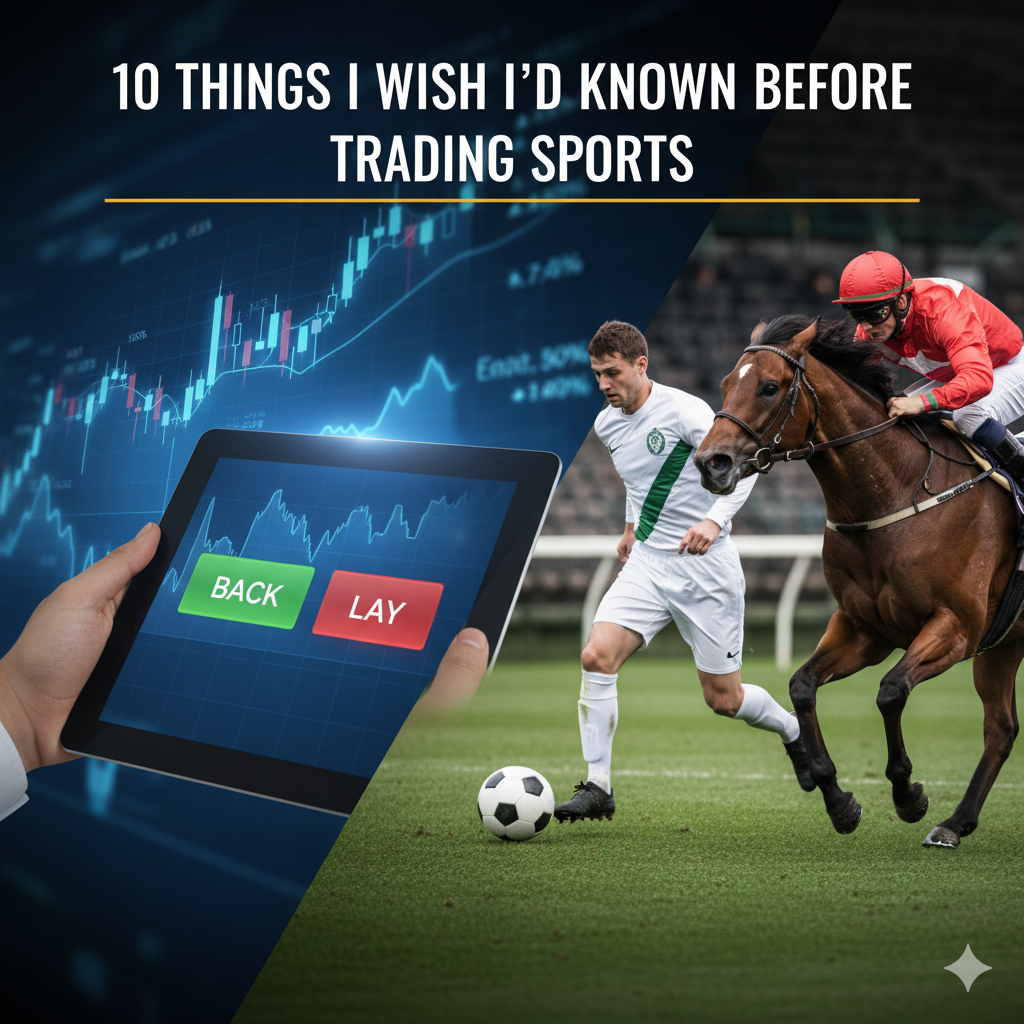
I’ve been trading since the summer of 2020. I had done several years of traditional betting, taking £10 to £400 using small stakes and controlled betting. This is where the fun is for me. Using big stakes and risking losing the lot does nothing for me. The buzz is in trying to beat the system. It is taking a small bank and turning it into something that could buy you something of high value. After traditional betting, I did a couple of months matched betting before turning to trading.
Trading is by far the hardest of these three disciplines. Before my first six months were done, I was already onto my third small bank (£20 banks from memory). Whilst this is small money, it was still a painful experience. I wasn’t used to losing like this. Looking back, I made some fairly elementary mistakes which with experience, I can now see where I went wrong.
Listed below are ten key areas that I wish I would have known in 2020 before embarking on my trading journey. A lot of these areas are inter-linked but understanding these will hopefully lead to a successful beginning to trading.
1. Trading is not as easy as the videos make out
I took my early education from Peter Webb’s videos. Big mistake! I think it is widely agreed that Peter is on a different level to most other traders. Watching his videos gave me a false sense of what was realistic. Whilst the videos are extremely educational, they are totally the wrong content for beginners. Unfortunately, as they are popular, YouTube served these up following my search. Even now, I am still no closer to reading a horse race pre-off. I form an opinion and I’m either too late to the party or the market has turned and gone in the other direction.
Moving on to football videos, which in my mind are easier to understand. After trading for a few weeks or months, you’ll realise that trading is difficult. I found that out the hard way losing two banks early on. Watching video after video, each with a profitable strategy enclosed serves one purpose and one purpose only. To gain revenue from YouTube views. The strategies can’t all be profitable.
Football trading often moves at a lower pace than the five minutes before post time in horse racing. When a team scores a goal, however, you need to understand your exact plan. The videos constantly tell me to “leave it a couple of minutes for the market to settle down.”
Whilst it makes sense to wait for the market to correct itself, those two minutes are naturally decaying time and giving you less favourable odds when you decide to trade out. The videos don’t communicate any of this in a simple way.
2. Start slowly and concentrate on one strategy
The tendency is to chop and change from strategy to strategy. You could get away with this in traditional betting but less so with trading. With trading there are more choices. Do you exit, if so when? What do you do if x,y,z happens? It is very easy to get yourself confused if you are trying to manage many complex strategies as once. Trading multiple games at once is a recipe for disaster. It is extremely difficult to keep an eye on all of the different markets, especially without dedicated software. The more key presses or mouse clicks you have, the greater the risk of mistakes being made.
By concentrating on one strategy at a time, one game at a time, you will quickly learn the characteristics of the particular strategy and what works and what doesn’t. When I started, I was mainly doing football but as the videos made things look easy, I was dabbling in tennis, horse racing, even snooker. I’d never placed a bet on snooker before getting into trading.
I was trying to find things that just weren’t there, all for the sake of a few ticks profit. One trade sticks vividly in my mind. Rafael Nadal was a short favourite to win a match (1.10 or lower from memory). This was in the day where £2 was the lowest stake on Betfair. I was sure he would win so even when he went out to 1.20, then to 1.40 and even further, I was still adding my £2 back bets. I lost £8 on that match when he eventually lost. Not a great amount but when the bank was £20, I had just blown 40% on one trade. I thought it was a surefire way to make quick profit but my decision making was based on who the player was and not in match dynamics. This was a lesson learnt and a mistake I have not made since.
3. Understand the theory and not just the execution
Theory is key. When I first started trading, I knew nothing about value, what implied odds were or what a p-value was. In fact, I remember asking a trader in a community I was a member of, “should I be concerned about the p-value”. I was told that it wasn’t important. Something that later on, I found to be wrong information. I am a data-centric person. I need evidence that backs up my decision making. In my professional career it is important to interpret the data correctly and my trading follows the same path.
As recent videos have shown, value is now at the centre of of my trading. If there is no value, I don’t get involved. In my early days, it was just a case of blindly trading on selections that met my criteria. They could have been poor value, they could have been exceptional value. I wasn’t even considering this.
Odds calculations are important to understand. It’s not just a random number that has been formulated out of thin air. The science arounds bookmaking is fascinating and once you know how odds are generated, it gives you the starting ground to try and beat them.
4. Laying can be good
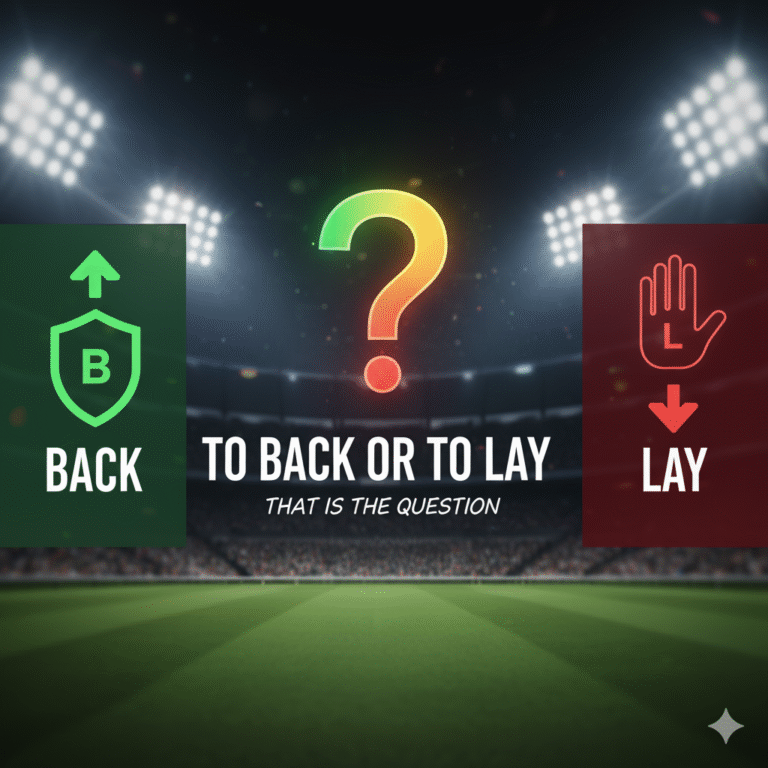
Coming mainly from traditional betting, laying was foreign to me for a while. I was especially reticent to lay at odds over 2. It felt like a quick way to lose a lot of money. It was a different mentality to what I was used to. Now, laying has become second nature although I only lay when odds are below 2, mainly due to the reasons we discussed in an earlier blog post. In fact, laying at low odds gives you scope to make good profits. It took a while for this penny to drop. Laying £10 at odds of 1.10 was only costing me £1 in liability. If the odds moved out, even to 1.2 or 1.25, this was giving me good profit.
Going back to the Nadal example in the previous section, if I had laid Nadal at the short odds, I would have made a decent profit, even if he did come back to win the match. I find laying great when there is a short priced favourite. It is a low risk approach, there is only a short range where the odds can go against you but a huge percentage of the book where you can profit.
5. Learn to trust nobody
This point is easier said than done. When starting trading, it is natural to want to attach yourself to a self-proclaimed professional trader. Someone who has been there and seen it all before. The only problem is that they have no credentials to speak of. You don’t know them, they could be anybody with little or no trading experience, but just want to make a name for themselves. They might be vocal on social media, they might put out engaging Youtube content, but the fact remains, they have no tangible credentials. Often strategies they promote offer no long term value and are not sustainable over a period of time.
This brings us back to the p-value question I mentioned above. When I was told it was not important, I can only assume the person who told me that had no idea how it worked, so dismissed it instantly. I was none the wiser so took their advice at face value.
I’ve learnt over the years that the trading community are quite a fickle bunch. If there’s an argument to be had, it will quickly turn into a playground squabble. Lot of people use fake accounts for reasons only know to themselves. The typical stereotype of a financial trader is someone responsible with finances with a certain level of intelligence. If you frequent any of the online sports trading communities, this persona is blown completely out of the window. Yes, 90% of members are decent but the ones who hide behind the fake accounts or have a confrontational agenda can spoil things for everyone.
There have been many occasions where I thought of walking away from trading because of certain people involved in it.
6. You don’t need everything people want to sell you
The phrase FOMO (Fear Of Missing Out) is commonly used language in trading circles. Often related to market momentum it also applies to software products. Once you are invested in a particular trading group, it is common for people to purchase everything they have to offer without giving much thought to what they are actually buying. I’m a sceptical person at the best of time so I never bought into these blatant marketing exercises.
Quite often I’ve seen people purchase worthless software or services just to “stay relevant” in the group. If you stick with the principal that you only buy software or services that are going to enhance your trading, you won’t go wrong.
This is one of the reasons I give me software away for free. I’ve seen far too many times, profiteering from unsuspecting followers. I’m trying to show that trading doesn’t need to be an expensive game. I just do things differently. I may succeed in changing the trading mindset but somehow, I doubt it.
7. Be your own person, own your own trades
This relates to the previous point. Don’t be swayed by others. We’ve probably all followed tipsters in our earlier betting days. I know I have. We’ve probably all lost money long term. Some may have even paid a subscription for a VIP service. What did you learn from being a member of such groups? Probably nothing. Having someone feed you selections enhances your trading by a big fat zero. What would you do if that person stopped posting these selections? You would be lost.
Creating your own selections is the only way to move forward. This was daunting for me to start with. I was second guessing myself and had no confidence in my selections. It requires a lot of work and research to find your own selections. It is far easier to have someone do all the hard work for you. What you won’t notice straight away is that by doing your own research, you are actually spotting patterns and getting more analytical looking at the data. This experience is what will move you slowly to the next level of trading.
8. Losing trades are ok
We all like to be proved right. It is human nature to want to win. Unfortunately trades lose from time to time. What you shouldn’t do is dwell on a losing trade. Much the same that you shouldn’t bask in the glory of one winning trade. It is a journey you are on. Whether you have a winning or losing trade, always learn from the outcome. In the previous section, I mentioned that I had no confidence in my selections when I started picking my own selections. I took it personally when these trades lost. I was convinced I was a bad trader. I’m nowhere near being a top trader but I can now brush off a loss as I know the entry criteria was solid in terms of value.
It is when you get on a run of losses where it really challenges your resolve. This is where the temptation is there to chase your losses. That can soon spiral out of control. They key is to trust your process and continue doing what you are doing. Reviewing the selection and entry criteria is also a good idea but don’t change things drastically on the back of a few results.
9. Record keeping is essential
Keeping records is boring. Everyone starts off with good intentions but it soon becomes a chore and people stop doing it. Without these records, it is tricky to know whether a strategy is working or not. You will be unable to spot patterns and identify ways where you can tweak a strategy to improve it. I started off without keeping any records. I had never kept any records in my traditional betting. All bets were viewed as being individual transactions with no correlation between bets.
I didn’t have a clue what was working and what wasn’t. In fact, my record keeping was terrible until I used CGMBet. This enabled me to use the software to track trades and evaluate my performance. It was at this point when things became clearer. I could now improve.
10. Be realistic in your trading goals
We see the videos of people allegedly making hundreds of pound worth of profit. This looks great for a video. Flip this on it’s head though. How much would they have lost if this trade had gone against them? Not so attractive now is it.
Stick within your means. If you can only afford to lose £5, don’t expose more than £5. If your risk level is low, use stakes which fit into this mindset. There is no harm in using micro stakes. It enables you to learn without the pain of big losses. Most traders will not be making hundreds of pounds per trade. It is unrealistic to think otherwise. Even with small stakes, making £3 a day gives you over £1,000 in a year. That is achievable with a bit of skill and good luck. Who would turn down that kind of additional income?
I’ve always used low stakes. Big stakes do not interest me in the slightest. I want to enjoy my trading. I don’t want to be stressing that I need every trade to win because I’ve put the price of a nice meal with the family on as the stake. That is my mentality.
This is a problem a lot of people have. Following on from my video showing my trades for a week, I got asked why people should take me seriously as I was using low stakes. The fact that I was showing my balance, could account for every trade and talked about my decision making for all trades was completely overlooked. The main issue to them was my stake size. This is not being realistic. Stake size does not define a good trader. For me, my goals are to make steady profits over a period of time using small stakes and managing risk by selecting games that have significant value.



All good common sense points raised, amazing how many of us will not follow them and then wonder where we are going wrong.